Focus on what you CAN be!

Affirmation: A flower does not think of competing against the flower next to it. It just blooms! Today I make a list of all of my abilities, accomplishments and qualities. These are what I will nourish and see them grow strong!

Who isn’t delighted by a gorgeous rose, a beautiful symbol of love, romance, and life itself? It didn’t start out that way though. Nature’s storms pelt the little seed in similar fashion to what we experience in life. However, the turbulent moments in life are where roots grow deep and the seed starts to take the shape of a lovely flower IF, as the gardener, you nourish your seed (life) properly. In spite of the thorns (trials of life), the transformation has brought you from a tightly closed bud to a magnificent bloom.

When shopping for the flowers, you look at the photographs on the seed packages. They do not show you a picture of what the seeds look like in their current state, as dark, tiny, ugly seeds that do not showcase their true beauty and potential. The package shows the magnificent end result. Given the right nutrients and care, it will blossom into a vibrant and delightful creation. Likewise, when you look in the mirror, never see yourself as inferior, unlovely or defective–but as you truly are–a child of God’s magnificence! Allow the seed inside you to grow, and only focus on the lovely picture of what you can become!

Rita Rocker

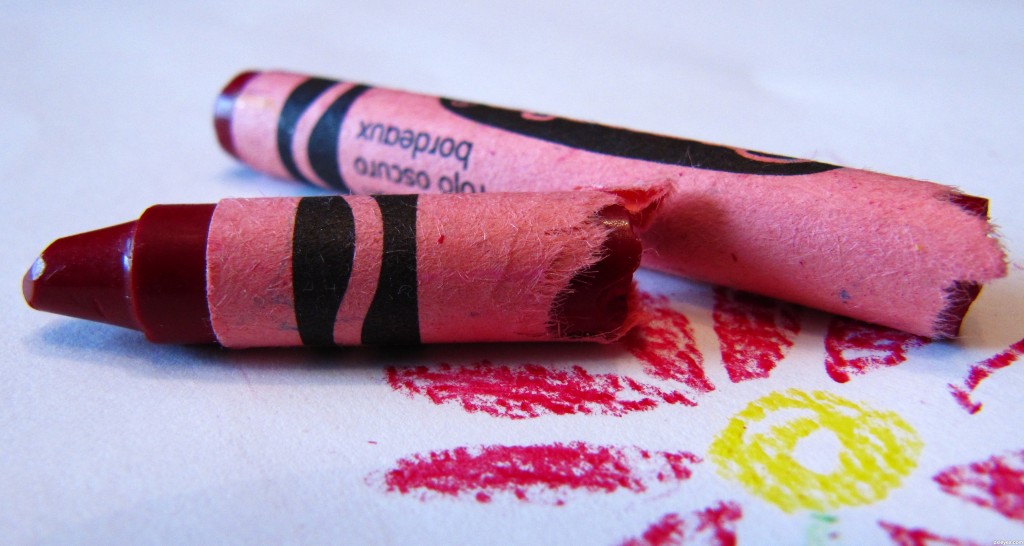
Broken Crayons Still Color!!

No matter the current difficulty, with God’s hand in yours, you still have the power to

  • redesign

  • regroup &

  • make an awesome impact

in your life and in this world!

After having six surgeries (two on back and four on head) plus other painful medical procedures in six months, I speak from experience. #5 was a 7-hour complicated and serious brain surgery. I may have been broken for a while but it’s time to sharpen the crayon of life and get going!!

You can begin again. Get excited and get going! 

Rita Rocker

Be a Weeble. Get Up!

If you fall seven times…stand up eight! When I get knocked down in life, getting up and moving forward is my choice and I’m taking it!

Be a Weeble doll, the ones with the rounded bottoms that always bounced back up when they were pushed down. Just like those Weebles, you may fall over but you cannot fall flat!! You can conquer your fears and be a powerful woman if you trust God and continue taking positive steps each day, even if it is just one little change or addition to what you normally do.

  • Imagine yourself doing what you love even though you have no idea how you will achieve your goal.
  • See yourself with your new partner, new career, thriving in a new city, several dress sizes smaller, or whatever you heart’s desire is.
  • Smile (you can actually put one on your face even when you don’t feel like it and it will immediately make you feel better. You can tell yourself to smile several times a day, just to practice until it becomes a routine). Get some form of exercise or movement each day, even if it’s only for a few minutes, and enjoy how you feel afterwards. Make an effort to meet new friends/clients. Enjoy more fellowship and at least one hobby. Spend time every day creating the picture of your new life.
  • Be sure you speak in the present tense when you say your affirmations. See it now!

Rita Rocker


The Art of Self-expression

The strongest message can be diluted by an inappropriate choice of words. The message may not be perceived as confident or business-oriented as you really are. Your message is three-fold: body signals (do they match what you’re saying?), tone of voice and choice of words.

Business language is different from social conversation. Avoid using “empty” modifiers such as thanking a sales representative “ever so much,” or referring to a job applicant as a “lovely person.” A better choice of words would include bright, intelligent, quick wit, etc.

Instead of saying, “That was great!” try “I felt you gave an excellent and thorough presentation. It will be very helpful to us.”Exclude “tentative” words such as “I was kind of wondering if” or “I think we could try.” Eliminate “well,” “sort of,” “kind of” and “maybe” from your business vocabulary. These phrases all show uncertainty.

Leave out cold and dictatorial commands. Use “please,” “when you can,” and “what do you think?” which are better choices.
Harsh: “I want to talk to you.”Uncertain: “May I talk to you?”
Confident: “I want to talk with you when you’re free.”
Consider the kind of message that each of the following phrases projects: “Maybe you could call tomorrow?” “Call tomorrow.” “Please call tomorrow as soon as you can.” The third is the most favorable for cooperation.

Self-effacing: “I know this sounds stupid, but…” Apologies don’t contribute to the speaker’s image of a confident professional. Instead, it is better to say, “Tell me if I’m on the right track with this, I believe…” Be careful not to raise your voice at the end of each sentence: “Hello? This is John? I’m calling about your monthly report?” It gives the impression of uncertainty.

Force yourself to stand tall, walk with authority, look others in the eye and speak up. If you’re nervous, you may need to speak more slowly and lower your pitch (especially if you’re a woman).

Remember: Winston Churchill was a self-made speaker. He was 5/5” tall, stuttered, lisped and had little college education. He was so terrified of public speaking that he passed out while delivering a speech to the House of Commons. However, he practiced his speeches for four hours and became a great orator and statesman! A little determination and practice can go a long way in building greater credibility and stronger relationships!

Mingle With Confidence Using Interaction Zones

Many people are uncomfortable mingling during a networking event.  We are often worried about what people will think of us. The easiest way to get around that is to put your focus on them.  How?  First of all, look for people who appear somewhat lonely, standing by themselves.  They will appreciate you coming up to them asking what brings them to the event, etc.  This helps get conversations going before you walk up to groups of people who might be engaged in a conversation.  It is easier to enter a group when someone leaves and you can enter in comfortably.  These tips will also help:

  • People approach when your back is to light, such as standing in front of a window during the daytime
  • Keep your posture erect, arms and fingers open, with a friendly smile that invites conversation
  • Always hold your beverage in “left” hand to avoid wet and clammy handshake

The concept of interaction zones is used to illustrate individuals’ preferred zones of physical closeness during communication and interactions.  Commonly defined as:

  • Public space:  7 or more feet  (where you want your grocery cart, space between you and the next one in the bathroom stall, an empty seat next to you in the theater)
  • Social:   3-6 feet (you’re part of a group but you don’t have to yell to be heard, you’re part of the inner circle)
  • Personal:    1-2 feet,  for more private conversations, closer interactions
  • Intimate: 0-1 foot (not for business conversations)Remember, the best conversationalists are the ones with the best “listening” skills!
  • Research indicates that group performance is enhanced at closer, face-to-face distances of approximately 18 inches.  However, it’s important to note that this is too close for comfort for some individuals.  Generally speaking, men tend to prefer greater distances in communication than women are comfortable with.

Smile, be open and engaging, ask questions, and be helpful referring others you know who could benefit the one you are speaking with. They will appreciate it and seek you out for a long-lasting relationship.

Mastering the Art of Introductions

Introductions can be confusing so here are some effective tips for greater confidence. If you’re hosting an event or in charge of introducing several people to each other, your goal is to help everyone feel comfortable to continue their conversation once you walk away.  The best approach is to…

  • Use a “conversational starter.”   Example:  “Dr. Johnson, I would like you to meet Sally Smith.  Sally, this is Dr. Ken Johnson, head of the psychiatry department at the Med Center.  Sally has just moved to town from Phoenix.”  Both first and last names have been given as well as one item about each person that the other one can start a conversation with.
  • If introducing a married couple with different last names, you may say,  “Dr. Barbara Taylor and her husband, Brian Jones.”

When introducing two people during business:

Introduce the person with the “least important” title (regardless of gender) to the person with the most important title.  For example: Mr. or Ms. Greater Authority, I would like to introduce you to Mr. or Ms. Lesser Authority.  This usually refers to saying the company president’s name before the sales rep.  When introducing someone to an individual from another company, the one with the “highest position” is actually the guest, or client…even if he/she holds “lower” title.

Introductions should be brief.  “How do you do?” or “Hello” is fine.  If you can’t remember someone’s name, reintroduce yourself and they will often say their name again.  If they don’t, say something like, “We met at last month’s marketing conference at the Embassy Suites.  I apologize but I don’t remember your name.”  They should offer it to you at that point.  If they still don’t, just smile and say, “I apologize but I don’t remember your name.”

The main thing is to lean slightly forward, give a warm handshake, smile and be totally sincere and engaged in getting to know them.


How to Successfully Work in the Cubicle World!

Because those in cubes so visible, subconscious assumption that person always available.

Control over own space:  Knock on cube walls (even if only symbolic foam partitions) before speaking.  Ask permission to enter.  Don’t hover if they’re on the phone.  “Don, we’re in close quarters, but would you mind giving me privacy when I’m on the phone?”

Don’t loiter:  Conversation free-floating among people who are trying to make phone calls, read or write important documents and concentrate on their work.  “Mary, I’m working on something right now that demands my full concentration.”

Odors:  No boundaries.  What smells good to you can turn someone else’s stomach.  If eat at desk, take trash out immediately.  Shoes ON.  Strong perfume.

Possibly alternate lunch hours with those around you to have some quiet time.

Aware of what you say and how loud you are.  Personal tiffs, weird bodily functions, clipping or tapping nails, gum popping, the radio, etc.  Avoid shouting over walls.  Assume everyone within a four-cube radius can hear you.  Take sensitive matters to a closed-door room.  No vibrating cell phones on your desk jumping around.

“Prairie Dogging”  Popping head up over cube (or talking over wall):  “Bob, I know it’s easiest for you to talk over the wall, but would you do me a favor and come around?”

Cubeland Home:  Tastefully “framed photos,” nice plants, small Persian rug, meaningful knickknacks or posters.  THESE ALL GIVE OFF POSITIVE IMPRESSIONS.

 For more information on a seminars or personal coaching, contact Rita Rocker, Chief Communications and Image Officer, Transformation Academy, 402-968-3250 rita@transformationacademy.com, www.transformationacademy.

 Follow Rita on FaceBook: Rita Rocker;   Twitter: @Rita_Rocker       LinkedIn: http://budurl.com/ayjl;     YouTube: RitaRockerSpeaks 


How Do I Handle This Introduction?

Business Introductions:  Why is it so hard to remember someone’s name?  Well, the first seven seconds we are sizing them up before listening (checking out their clothing, hair, grooming or a myriad of other things)…so we aren’t really listening!  The best way to introduce yourself, particularly if you are standing up in a large group of individuals you do not know, is to say 1) what do, 2) for whom, and then your name).  Example:  Hi.  I’m Chief Communications and Image Officer with Transformation Academy.  My name is Rita Rocker!  Take a slight pause between your first and last name, adding a little emphasis to the last name.  By then, the person should be more focused on listening to you versus giving the visual once-over

When introducing two people during business:

Introduce the person with the “least important” title (regardless of gender) to the person with the most important title.  For example: Mr. or Ms. Greater Authority, I would like to introduce you to Mr. or Ms. Lesser Authority.  This usually refers to saying the company president’s name before the sales rep.  When introducing someone to an individual from another company, the one with the “highest position” is actually the guest, or client…even if he/she holds “lower” title.

Introductions should be brief.  “How do you do?” or “Hello” is fine.  If you can’t remember someone’s name, reintroduce yourself and they will often say their name again.  If they don’t, say something like, “We met at last month’s marketing conference at the Embassy Suites.  I apologize but I don’t remember your name.”  They should offer it to you at that point.  If they still don’t, just smile and say, “I apologize but I don’t remember your name.”

The main thing to remember is to lean slightly forward, give a warm handshake, smile and be totally sincere and engaged in getting to know them.

For more information on a seminars or personal coaching, contact Rita Rocker, Chief Communications and Image Officer, Transformation Academy, 402-968-3250 rita@transformationacademy.com, www.transformationacademy.   Follow Rita on FaceBook: Rita Rocker;   Twitter: @Rita_Rocker       LinkedIn: http://budurl.com/ayjl;     YouTube: RitaRockerSpeaks

How to “silently” and successfully talk to one or 1,000!

Every day we present our thoughts and ideas to business prospects, teachers, parents, organizations, friends or even the one in line next to us. Our first interaction will leave a lasting impression…so make it the best one! Since 55% of our message is non-verbal, make sure your body is relaying the same message as your mouth. Whether you are giving a sales presentation to a large number of individuals, sitting across from two people at a table, or trying to raise funds for a worthy cause, use the following tips to ensure your non-verbal signals bring the success you are looking for. The more positive and confident your interactions, the greater your success in building a relationship that could last for years. Following are signals that can either enhance, or destroy, future relationship:

Your energy. Be aware of the energy you are transmitting! Is it motivating, positive, exciting, confident, worrisome, pre-occupied? Set a positive tone with your facial expressions, sincere eye contact and friendly, yet controlled body language. Non-verbal signs of defiance, angst, fear or frustration could propel the listener to the other side of the room, even if your words are saying something entirely different from what your body is projecting!

  • Hands. It is said that eyes and hands are open and closed according to the person’s present state of mind. They tell so much about you. Hands should face palms up with fingers open (welcoming them to come in to your “space”) or at your side. If you are new at speaking and feeling uncomfortable, hold a pen in one hand. Having one hand in your pocket briefly is acceptable but both hands in your pockets gives the impression of either being arrogant, lacking confidence or hiding something.
  • Pointing. Pointing a finger or a pen in someone’s general direction immediately puts them on the defense. When asking an individual a question or to sign a paper, hold your pointer or pen like you would if you were writing, at an angle. It seems like a very small matter but can give a strong message subconsciously.
  • Touching. A friendly touch on the shoulder is often meant as a welcoming gesture, however, note their response. If they recoil, smile and back away. Touching sometimes reminds individuals of an unpleasant experience and is not anything personal against you. We just always want to be respectful of their reactions.
  • Eye contact. In the U.S., eye contact is a necessary for honest, productive conversations. In some other countries, looking someone in the eye could be considered disrespectful. Good eye contact gives the impression that you are trustworthy, confident, credible, and serious about your conversation or presentation.
  • Your eyes. Avoid darting eyes, scanning people’s shoes, or any eye messages that give the impression you are not completely engaged in a conversation with them.
  • Statements or questions. When people raise their voices at the end of a statement, it sounds like they are questioning themselves rather than making a statement. The listener may think, “If you are not sure what you are talking about, why should I take you seriously?” Result? You can be overlooked in business meetings, presentations or as a valuable part of the team. Approximately 80% of voiceovers on television are done by men because of their lower pitch lends to their credibility. Soft or high-pitched voices can give the impression of not being capable or able to manage the task as successfully as someone else.
  • Letting others finish your sentences. If individuals in your audience interrupt, your first mode of defense is to raise your volume slightly. If that does not work, hold up your index finger while slightly raising your volume. If they still didn’t get (or heed) the message, raise your hand in the “stop” position. As a last resort, hold your hand up in the “stop” position and say, “Excuse me, I wasn’t finished yet.” This act should keep you in control and maintaining your composure.
  • Adjust your mode of speaking according to the type of group you are talking to. Be more energetic if talking to someone of like manner and do not overwhelm someone with a strong voice if they are quiet and reserved.

Non-verbal messages can diffuse hostility by maintaining a composed demeanor. Restraining your own body language when someone is angry with you can actually have a calming effect on them. Keep your voice low and limit gestures while preserving a relaxed posture to discourage others from a potential rant.

Bottom line: always check to ensure your body is saying the same thing your mouth is. You goal is to have the most clear, concise, confident message possible.